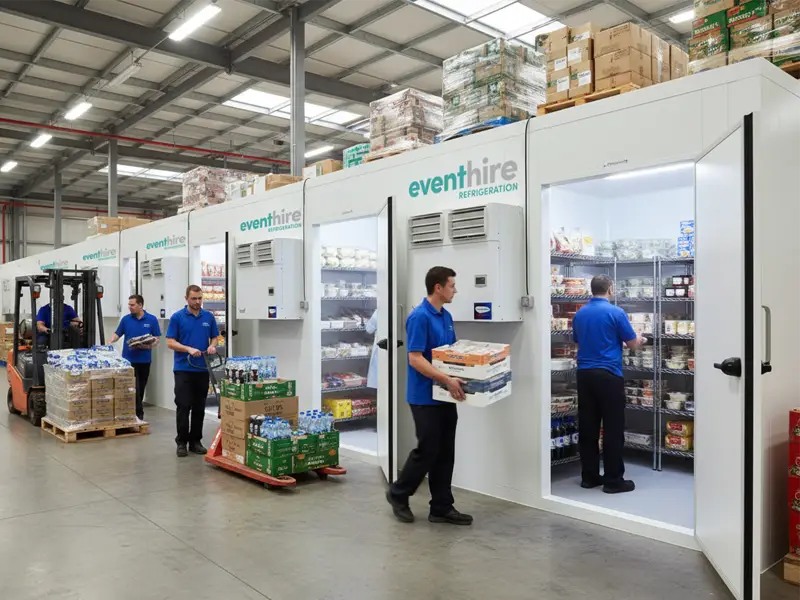
Maintaining correct chilled storage temperatures is not simply good practice — it is a legal and operational requirement. Whether you run a restaurant, manage large-scale catering or rely on walk-in fridge hire UK for temporary storage, stable temperature control is critical to food safety, compliance and stock protection.
This guide explains best practice for walk-in fridge temperature management, including legal requirements, monitoring procedures and practical advice for events and commercial environments. If you are responsible for refrigerated storage, understanding these principles will help you meet food safety refrigeration UK standards and avoid costly mistakes.
Table of Contents:
What temperature should a walk-in fridge be?
The safe operating range for a walk-in fridge temperature in the UK is between 0°C and 5°C.
According to Food Standards Agency (FSA) guidance and food safety regulations UK, chilled food must be kept at 8°C or below by law. However, best practice in commercial environments is to operate within the tighter 0°C to 5°C safe zone.
Most operators aim for an ideal target range of 1°C to 4°C. This provides a safety buffer in case of minor fluctuations while ensuring compliance during Environmental Health inspections.
If you are asking what temperature should a walk-in fridge be, the answer is clear: maintain consistent chilled storage between 0°C and 5°C, ideally around 3°C.
Why temperature control is critical for food safety
Poor cold room temperature control can lead to serious consequences.
Bacterial growth
The “danger zone” for bacterial growth sits between 5°C and 63°C. Once temperatures rise above 5°C, bacteria can multiply rapidly, increasing the risk of foodborne illness.
Legal implications
Failure to maintain legal fridge temperature UK standards can result in enforcement action, fines or temporary closure.
Environmental Health inspections
Inspectors will review temperature logs, monitoring procedures and storage practices to assess compliance.
Reputation risk
For hospitality and catering businesses, even one temperature breach can damage reputation and customer trust.
Maintaining accurate commercial fridge temperature UK standards is therefore both a legal and commercial priority.
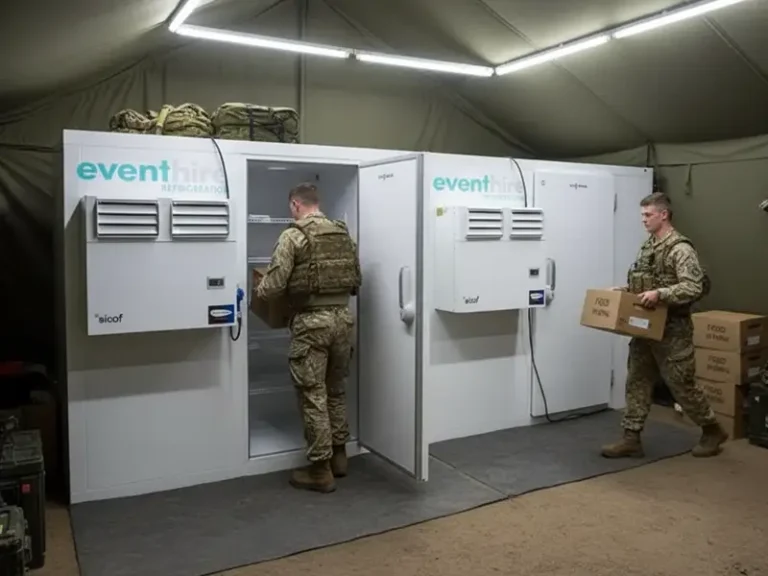
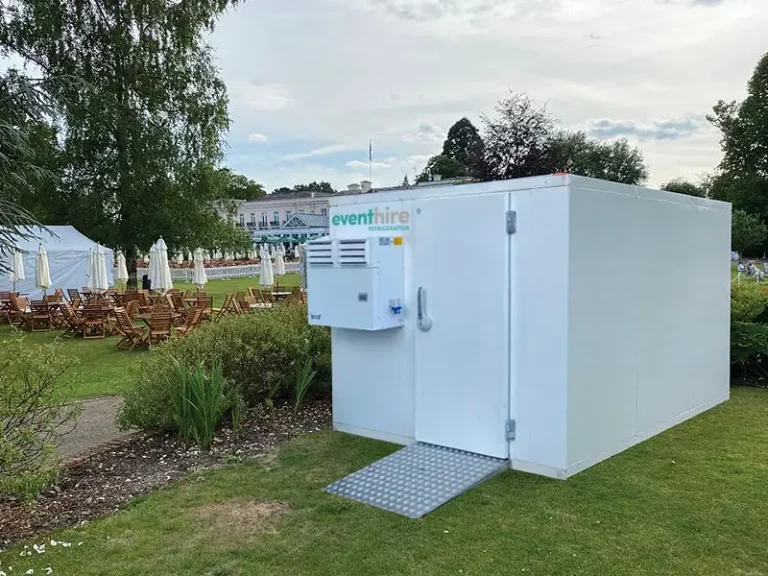
Walk-in fridge hire UK: Maintaining stable temperatures during temporary use
When using temporary walk-in fridge hire, additional care is required to maintain consistent conditions.
Installation best practice
Ensure the unit is positioned on level ground with adequate airflow around external condensers. Avoid installing near heat sources.
Pre-cooling
Allow sufficient time for the fridge to reach operating temperature before loading stock.
Door discipline
Frequent door opening allows warm air ingress. Encourage staff to minimise door opening time.
Load management
Avoid overloading shelves. Proper airflow circulation around products is essential to maintain stable internal temperatures.
Temporary installations, particularly walk-in fridge for catering events, must be carefully managed to prevent temperature instability during peak service.
How to monitor walk-in fridge temperature correctly
Accurate temperature monitoring for cold rooms is essential for HACCP refrigeration requirements.
Manual logging
Staff should check and record temperatures at least twice daily. Temperature logging requirements UK typically expect documented records.
Digital temperature probes
Calibrated digital probes provide accurate readings and support audit readiness.
Remote monitoring systems
Advanced units include automated remote monitoring systems that alert operators to temperature deviations.
Frequency of checks
Best practice is to monitor temperature at the start and end of each shift, with additional checks during busy periods.
Calibration checks
Regular calibration of probes ensures accuracy and compliance.
Whether you use cold room hire UK permanently or short term, proper monitoring protects stock and supports refrigerated storage compliance UK.
Common causes of temperature fluctuations
Understanding why temperatures fluctuate helps prevent breaches.
Overloading
Excess stock blocks airflow circulation and increases refrigeration load.
Poor airflow
Shelves positioned too close to evaporators can disrupt air movement.
Door opening frequency
Repeated door use allows warm air to enter.
Ambient temperature impact
Outdoor installations may experience greater fluctuations during heatwaves.
Power interruptions
Short power cuts can cause temperature spikes, especially without generator backup.
Condensation management
Poor drainage and excess humidity can affect efficiency.
Addressing these factors is crucial for food safety refrigeration UK compliance.
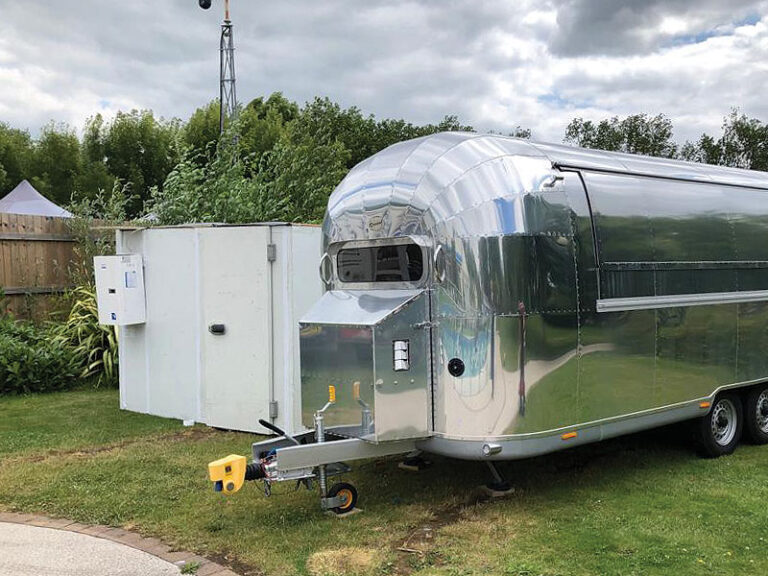
Best practice setup for events and catering
Event environments require additional planning.
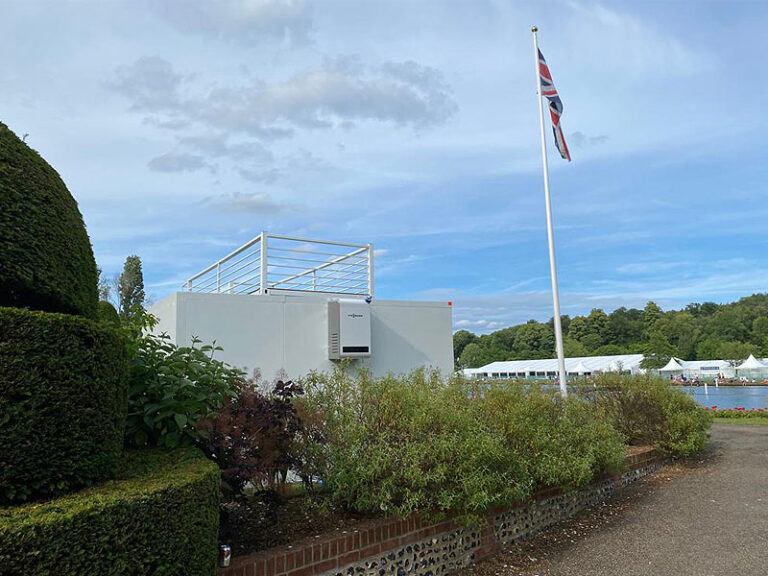
Outdoor placement
Position units away from direct sunlight and heat sources. Consider shading if required.
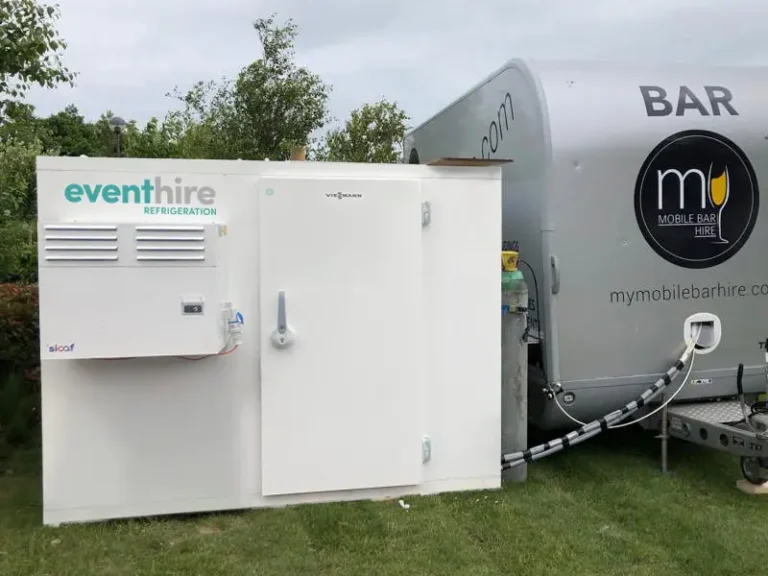
Generator use
Ensure generator capacity matches refrigeration load. Confirm generator compatibility in advance.
Cable safety
Electrical cables must be protected from water and trip hazards.
Condensation management
Allow sufficient drainage and airflow to prevent internal moisture build-up.
Walk-in chiller hire for festivals and outdoor catering demands proactive planning to maintain cold room temperature control in challenging environments.
Walk-in fridge vs fridge trailer: Temperature stability comparison
Businesses often compare walk-in fridge hire UK with fridge trailer hire.
Walk-in fridge
Offers greater internal space and shelving flexibility. Ideal for structured stock rotation and larger cubic metre capacity.
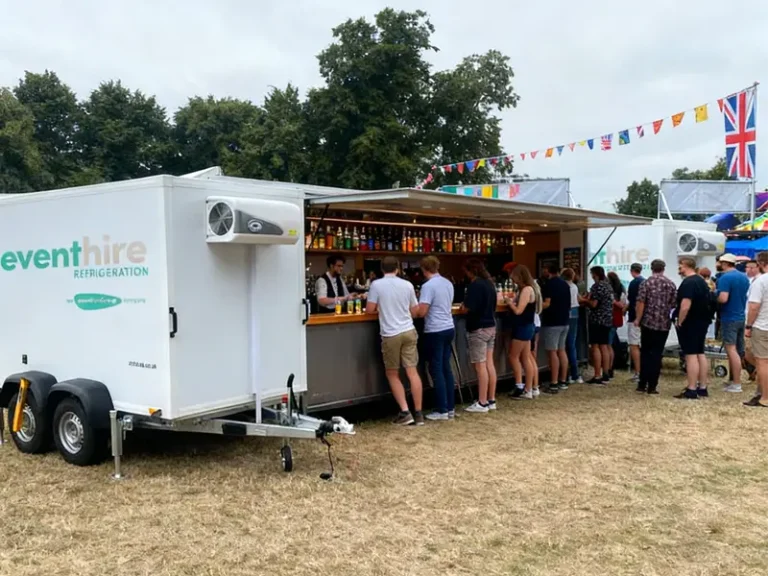
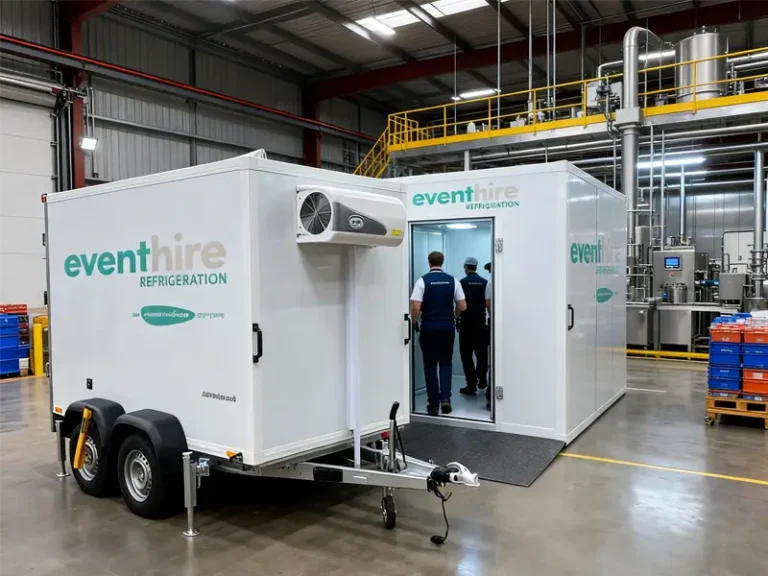
Fridge trailer
More mobile and quicker to deploy. Suitable for smaller catering operations or where space is limited.
From a temperature control perspective, both can maintain 0°C to 5°C effectively if installed correctly. The choice depends on capacity, workflow and event logistics.
UK food safety compliance and HACCP considerations
Maintaining compliance requires more than correct temperature.
HACCP compliance
A documented hazard analysis process must include temperature monitoring procedures.
Record keeping
Maintain clear logs of all temperature checks.
Audit preparation
Environmental Health inspections may request temperature records, cleaning schedules and calibration documentation.
Cross-contamination prevention
Separate raw and ready-to-eat products within the walk-in fridge.
Stock rotation (FIFO)
First In, First Out rotation reduces spoilage risk.
Blast freezing vs storage
Remember that chilled walk-in fridges are not designed for freezing. Frozen storage requires -18°C and appropriate freezer systems.
Professional walk-in fridge hire UK providers can advise on compliance best practice and appropriate equipment specification.
Walk-in fridge hire UK pricing considerations
While this guide focuses on temperature control, cost remains relevant.
Walk-in fridge hire UK pricing depends on:
- Unit size and cubic metre capacity
- Duration of hire
- Delivery and installation logistics
- Power supply requirements
- Seasonal demand
Investing in reliable equipment with proper monitoring systems is often more cost-effective than risking stock loss due to poor temperature stability.
Maintaining correct walk-in fridge temperature is essential for protecting food quality, meeting UK compliance standards and avoiding costly stock loss. Whether you rely on permanent installations or walk-in fridge hire UK for temporary use, consistent monitoring and correct setup are vital.
If you need expert guidance on cold room temperature control or reliable walk-in fridge hire UK for your event or commercial operation, contact Event Hire Refrigeration. Our team can provide tailored solutions designed to meet compliance standards, operational demands and your specific storage requirements.